 English▼



Site de Blog
Produção de Baterias Automotivas - Guia de Fluxo de Processo e Equipamentos Turnkey
Linha de Máquinas de Fabricação de Células Cilíndricas Automáticas
fabricação e equipamento de laboratórios de bateria li-ion 18650
fluxograma de célula de moeda de íon de lítio e lista de máquinas
fabricação e equipamento de laboratórios de baterias com bateria de íon de lítio
Contate-nos
- Se você tiver dúvidas, entre em contato conosco, todas as perguntas serão respondidas
- Email : David@tmaxcn.com
- Email : Davidtmaxcn@gmail.com
- Adicionar : No. 39, Xinchang Road, Xinyang, Haicang Dist., Xiamen, Fujian, China (Mainland)
produtos quentes
blogue
Electric Car Battery Production - Process & Equipment Guide
Scaling up a module or pack facility requires balancing cell consistency, cycle times, and budget constraints. Many plant managers face bottlenecks when shifting from manual assembly to structured throughput, particularly in laser joining and electronic quality checks. Choosing the right machinery determines long-term yield and reduces field recalls. This guide details key stages across the production floor, helping engineers evaluate mechanical setups and select dependable hardware for EV projects.
Core Stages in Pack Assembly
Building automotive modules begins with raw cell processing. Prismatic cells must be sorted by internal resistance and open circuit voltage to prevent early thermal divergence. Automated sorting feeds directly into cell stacking and tape insulation.
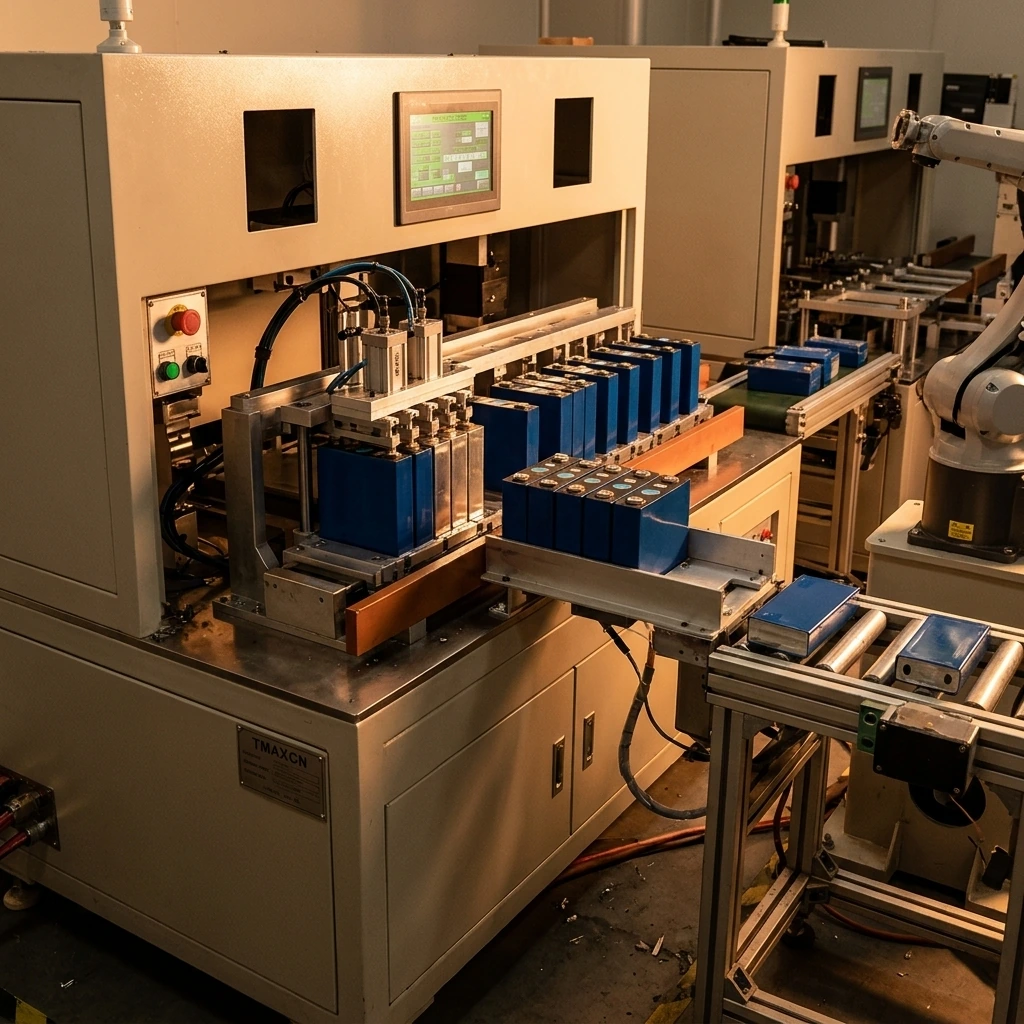
After mechanical staging, laser welding bonds current collectors to cell terminals. Precision spot welding and busbar integration ensure steady electrical flow under high vibration. The process then transitions to integrating the battery management unit. Technicians install sensors before moving the core block into final housing.
Key Machinery for Semi-Automated Lines
Modern plants rely on dedicated to maintain uniform output. Semi-automated configurations give operators physical control while enforcing mechanical precision at critical junctions.
Cell sorting machines classify prismatic units according to strict voltage tolerances. For heavy joints, specialized laser systems deliver clean penetrations without excessive heat exposure. Optical inspection modules then verify weld bead uniformity before structural adhesives cure.
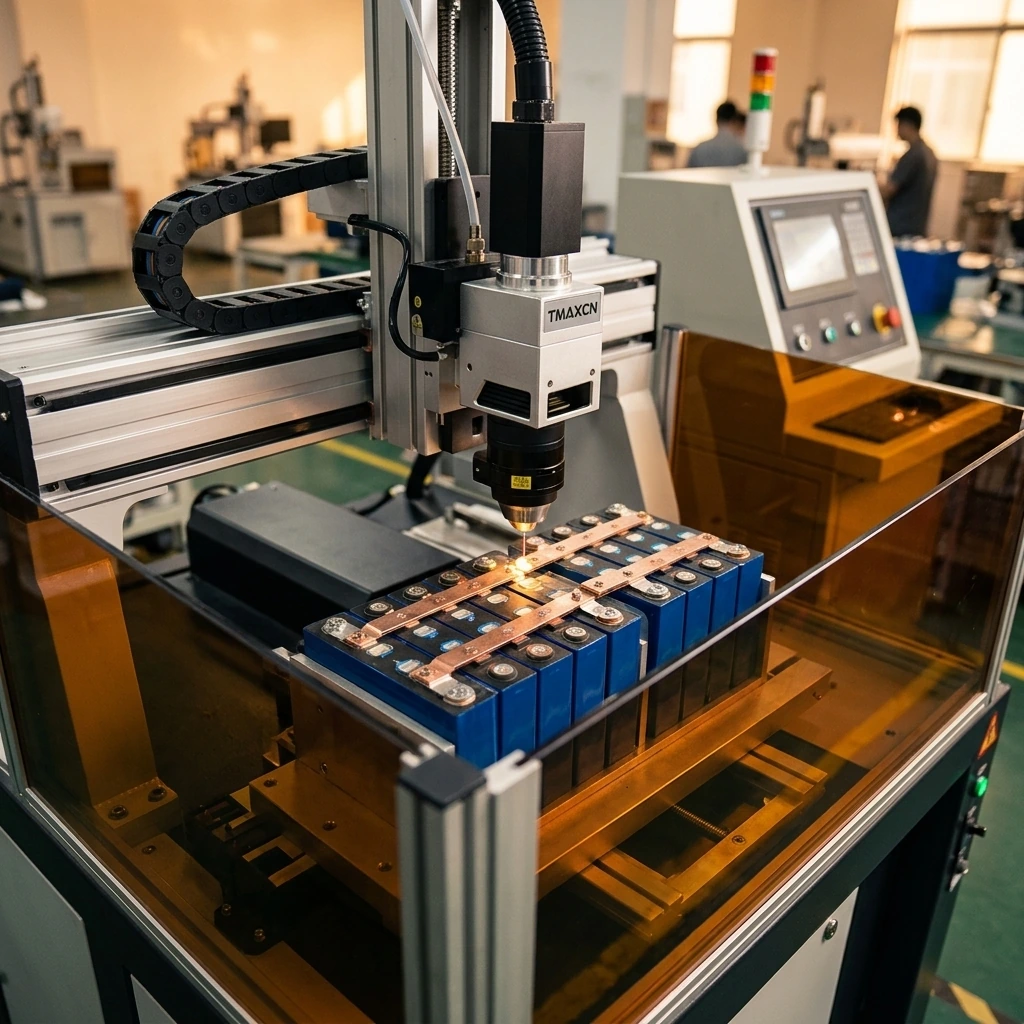
A properly balanced links sorting, welding, and casing without bottlenecks. Equipment layouts should permit smooth transfer between automated stations and manual inspection benches.
Quality Testing and Aging Protocols
End-of-line verification protects vehicle safety. Once harness connections and structural plates are secured, the pack enters comprehensive electrical assessment. Test systems check insulation resistance, voltage drop, and thermal probe communication.
Pack aging machines subject finished assemblies to charge and discharge sequences. These cycles simulate highway driving demands and thermal loads. Defective welds or weak cells surface during this phase, preventing field failures. Reviewing real plant layouts through a clarifies how cycle stations integrate with mechanical conveyors.
Sourcing and Integration Strategies
Deploying a line involves balancing lead times against customization needs. Sourcing individual machines from multiple vendors frequently leads to communication errors between PLCs. A unified engineering design keeps communication protocols standardized across conveyors, welders, and testers.
Selecting an established equipment partner simplifies spare parts supply. Clear mechanical documentation and remote diagnostic access reduce downtime during early ramp-up phases. Well-matched machinery ensures stable yield rates right from pilot validation.
FAQ
Can existing lithium battery pack equipment support different pack configurations?
Most semi-automated stations handle multiple pack dimensions by changing mechanical fixtures and updating programmable logic routines. Tooling swaps for cell holders and clamping plates take minimal changeover time during product shifts.
What lead time is standard for a turnkey battery pack solution?
Standard semi-automated setups typically require eight to twelve weeks from mechanical sign-off to factory acceptance testing. Complex configurations with extensive testing bays may require additional weeks for system integration and overseas transport.
 +86 13174506016
 David@tmaxcn.com


