 English▼



Site de Blog
Linha de Máquinas de Fabricação de Células Cilíndricas Automáticas
fabricação e equipamento de laboratórios de bateria li-ion 18650
fluxograma de célula de moeda de íon de lítio e lista de máquinas
fabricação e equipamento de laboratórios de baterias com bateria de íon de lítio
dez 2016 aceitação de fábrica do cliente nos EUA da máquina de empilhamento automático
Contate-nos
- Se você tiver dúvidas, entre em contato conosco, todas as perguntas serão respondidas
- Email : David@tmaxcn.com
- Email : Davidtmaxcn@gmail.com
- Adicionar : No. 39, Xinchang Road, Xinyang, Haicang Dist., Xiamen, Fujian, China (Mainland)
produtos quentes
blogue
Cold Isostatic Press
Xiamen Tmax Battery Equipments Limited was set up as a manufacturer in 1995, dealing with lithium battery equipments, technology, etc. We have total manufacturing facilities of around 200000 square foot and more than 230 staff. Owning a group of experie-nced engineers and staffs, we can bring you not only reliable products and technology, but also excellent services and real value you will expect and enjoy.
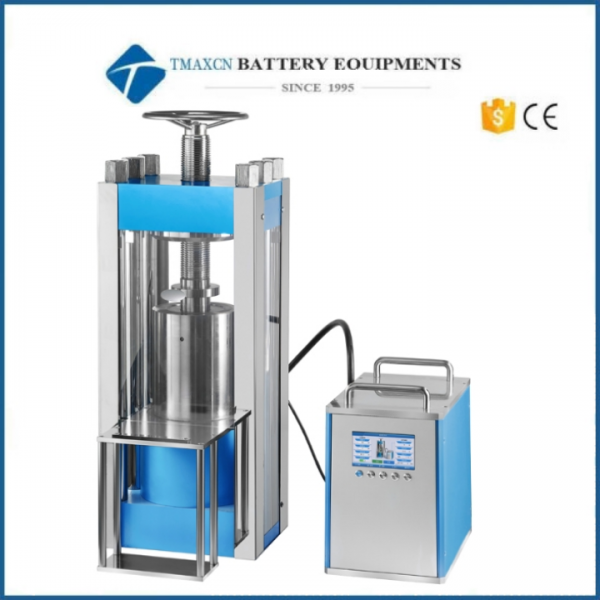
A Cold Isostatic Press (CIP) is a manufacturing technology used to compact powdered materials into highdensity, uniform shapes under extremely high pressures. Unlike hot isostatic pressing (HIP), which involves both pressure and heat, CIP operates at room temperature, making it ideal for applications where thermal effects are undesirable or unnecessary.
In this article, we will explore the design, operation, advantages, challenges, and applications of cold isostatic presses.
●Design and Operation of Cold Isostatic Presses
1. Key Components
Pressure Vessel: A robust container that withstands high pressures during the compaction process.
Hydraulic System: Generates and applies the required pressure uniformly in all directions.
Flexible Mold: Typically made of rubber or elastomer, this mold holds the powdered material and ensures uniform pressure distribution.
Control System: Monitors and regulates pressure, time, and other parameters during the process.
2. Operation Principle
The powdered material is placed inside a flexible mold.
The mold is sealed and submerged in a liquid medium (usually water or oil) within the pressure vessel.
The hydraulic system applies high pressure isotropically (equally in all directions) to the liquid medium, which transfers the pressure to the mold and its contents.
The pressure causes the powdered material to compact uniformly, forming a dense, nearnetshape component.
●Advantages of Cold Isostatic Pressing
1. Uniform Density:
The isostatic pressure ensures consistent density throughout the component, minimizing defects and improving mechanical properties.
2. Complex Shapes:
Capable of producing intricate geometries that would be difficult or impossible with traditional compaction methods.
3. Material Versatility:
Suitable for a wide range of materials, including metals, ceramics, composites, and polymers.
4. High Density:
Achieves higher green densities compared to uniaxial pressing, reducing porosity and enhancing final product quality.
5. Scalability:
Available in various sizes, from small laboratoryscale presses to large industrial systems.
6. CostEffectiveness:
Reduces material waste and machining requirements by producing nearnetshape components.
●Challenges in Using Cold Isostatic Presses
1. Initial Investment:
High upfront costs for purchasing and installing the equipment.
2. Mold Durability:
Flexible molds can wear out over time, requiring regular replacement.
3. PostProcessing Requirements:
While CIP produces nearnetshape components, additional steps like sintering or machining may still be necessary for certain applications.
4. Size Limitations:
Larger components may require specialized, oversized presses, which can be expensive and technically challenging.
5. Safety Concerns:
Operating at extremely high pressures requires strict safety protocols to prevent accidents.
●Innovations in Cold Isostatic Pressing
To address these challenges and enhance performance, manufacturers are incorporating advanced technologies:
1. Advanced Materials:
Use of durable mold materials and coatings to extend service life.
2. Automated Control Systems:
Realtime monitoring and adjustment of pressure and other parameters for optimal results.
3. Energy Efficiency:
Improved hydraulic systems that reduce energy consumption during operation.
4. Modular Designs:
Flexible configurations allow users to adapt the press to different material types and component sizes.
5. Integration with Other Processes:
Combining CIP with additive manufacturing or sintering technologies for hybrid production workflows.
●Applications of Cold Isostatic Pressing
Cold isostatic pressing is widely used across various industries:
1. Metallurgy:
Producing highperformance metal components for aerospace, automotive, and defense applications.
2. Ceramics:
Manufacturing advanced ceramic parts for electronics, medical devices, and industrial tools.
3. Powder Metallurgy:
Compacting powdered metals into complex shapes for gears, bearings, and other mechanical components.
4. Mining and Construction:
Creating wearresistant components for mining equipment and construction machinery.
5. Medical Industry:
Fabricating orthopedic implants and dental prosthetics with precise geometries and excellent mechanical properties.
6. Nuclear Industry:
Producing fuel pellets and structural components for nuclear reactors.
●The Future of Cold Isostatic Pressing
As material science and manufacturing technologies continue to advance, cold isostatic pressing will play an increasingly important role in producing highperformance components. Key trends shaping the future include:
1. Increased Automation:
Fully autonomous systems will optimize processing parameters and reduce human intervention.
2. Focus on Sustainability:
Ecofriendly practices and energyefficient designs will become integral parts of future systems.
3. Integration with Emerging Technologies:
IoTenabled presses will connect to smart factories for realtime data analysis and process optimization.
4. Development of New Materials:
Advances in powder metallurgy and ceramics will enable the production of even more advanced materials.
5. Customization Options:
Modular designs will allow users to tailor presses for specific materials and applications.
●Conclusion
Cold isostatic pressing is a powerful and versatile technology for producing highdensity, uniform components from powdered materials. Its ability to achieve complex shapes and superior mechanical properties makes it indispensable in industries ranging from aerospace to healthcare.
What excites you most about the role of cold isostatic pressing in advancing material science and manufacturing? Share your thoughts below! Together, let’s explore how this innovative technology can shape the future of industry and innovation.
 +86 13174506016
 David@tmaxcn.com

