 English▼



Site de Blog
Linha de Máquinas de Fabricação de Células Cilíndricas Automáticas
fabricação e equipamento de laboratórios de bateria li-ion 18650
fluxograma de célula de moeda de íon de lítio e lista de máquinas
fabricação e equipamento de laboratórios de baterias com bateria de íon de lítio
dez 2016 aceitação de fábrica do cliente nos EUA da máquina de empilhamento automático
Contate-nos
- Se você tiver dúvidas, entre em contato conosco, todas as perguntas serão respondidas
- Email : David@tmaxcn.com
- Email : Davidtmaxcn@gmail.com
- Adicionar : No. 39, Xinchang Road, Xinyang, Haicang Dist., Xiamen, Fujian, China (Mainland)
produtos quentes
blogue
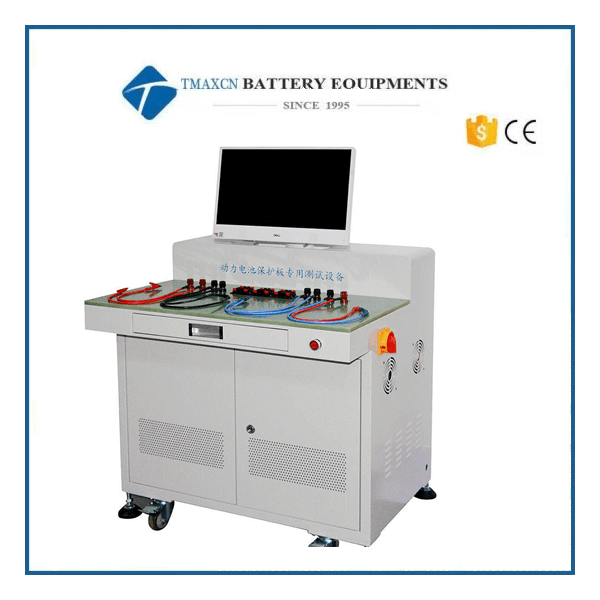
BMS Testing Machine
Xiamen Tmax Battery Equipments Limited was set up as a manufacturer in 1995, dealing with lithium battery equipments, technology, etc. We have total manufacturing facilities of around 200000 square foot and more than 230 staff. Owning a group of experie-nced engineers and staffs, we can bring you not only reliable products and technology, but also excellent services and real value you will expect and enjoy.
A BMS (Battery Management System) testing machine is a specialized device used to evaluate the performance, functionality, and safety of battery management systems. These systems are critical components in modern batterypowered devices, such as electric vehicles (EVs), energy storage systems, and portable electronics. The BMS ensures optimal battery performance, monitors health, and protects against overcharging, overheating, or deep discharging.
In this article, we will explore the design, operation, advantages, challenges, and applications of BMS testing machines.
●Design and Operation of BMS Testing Machines
1. Key Components
Signal Simulators: Mimic realworld conditions, such as voltage, current, temperature, and SOC (State of Charge).
Data Acquisition System: Collects and records data from the BMS during testing.
Control Unit: Manages the test sequences and adjusts parameters dynamically.
Safety Features: Prevent overcurrent, overvoltage, or short circuits during testing.
User Interface: Provides an intuitive platform for setting up tests and analyzing results.
2. Operation Principle
The BMS testing machine simulates various operating conditions that the battery might encounter in realworld scenarios.
It applies controlled electrical loads, thermal conditions, and communication signals to the BMS.
The machine evaluates the BMS's response, including its ability to balance cells, protect the battery, and communicate with external systems.
●Functionalities of BMS Testing Machines
1. Cell Balancing Verification:
Tests the BMS's ability to balance individual cells within a battery pack.
2. Protection Function Testing:
Validates overcharge, overdischarge, overcurrent, and shortcircuit protection mechanisms.
3. Communication Protocol Testing:
Ensures proper communication between the BMS and other systems using protocols like CAN, LIN, or UART.
4. State Estimation Validation:
Verifies the accuracy of SOC (State of Charge) and SOH (State of Health) estimations.
5. Thermal Management Testing:
Evaluates the BMS's response to extreme temperatures and its ability to manage thermal conditions.
●Advantages of BMS Testing Machines
1. Comprehensive Testing:
Covers all key aspects of BMS functionality, ensuring reliable performance under diverse conditions.
2. Reproducibility:
Allows consistent testing across multiple units, reducing variability in results.
3. CostEffectiveness:
Identifies defects early in the development process, minimizing costly redesigns or recalls.
4. Customizability:
Configurable settings enable testing tailored to specific battery chemistries and applications.
5. Safety Assurance:
Ensures the BMS can handle fault conditions safely, protecting both the battery and users.
●Challenges in Using BMS Testing Machines
1. Complexity:
Modern BMS designs are highly complex, requiring advanced testing equipment and expertise.
2. Simulation Accuracy:
Achieving realistic simulation of all possible operating conditions can be challenging.
3. TimeConsuming:
Comprehensive testing may require extended periods, especially for longterm stability assessments.
4. Cost:
Highend BMS testing machines can be expensive, particularly for smallscale developers.
5. Software Integration:
Ensuring seamless integration with BMS software and firmware can be difficult.
●Innovations in BMS Testing Machines
To address these challenges and enhance performance, manufacturers are incorporating cuttingedge technologies:
1. RealTime Simulation:
Advanced signal generators provide dynamic, realtime simulations of battery behavior.
2. AIPowered Analytics:
Machine learning algorithms analyze test data to identify trends and predict potential issues.
3. Modular Designs:
Flexible configurations allow users to adapt the testing machine to different battery types and sizes.
4. Wireless Connectivity:
IoTenabled systems facilitate remote monitoring and control of testing processes.
5. Energy Efficiency:
Regenerative testing systems recover energy during discharge cycles, reducing power consumption.
●Applications of BMS Testing Machines
BMS testing machines are widely used in various industries:
1. Electric Vehicles (EVs):
Ensuring the reliability and safety of BMS in EV batteries to maximize range and lifespan.
2. Renewable Energy Storage:
Validating BMS performance in largescale energy storage systems for grid stability.
3. Consumer Electronics:
Testing BMS in smartphones, laptops, and other portable devices for efficient power management.
4. Industrial Equipment:
Verifying BMS functionality in heavy machinery and industrial batteries.
5. Aerospace and Defense:
Ensuring robust BMS performance in critical applications like satellites and military vehicles.
●The Future of BMS Testing Machines
As battery technology continues to advance, BMS testing machines will become even more sophisticated. Key trends shaping the future include:
1. Increased Automation:
Fully autonomous systems will optimize testing workflows and reduce human intervention.
2. Focus on Sustainability:
Ecofriendly practices and energyefficient designs will become standard.
3. Integration with Emerging Technologies:
Combining BMS testing with AI, IoT, and cloud computing for smarter diagnostics.
4. Development of New Battery Chemistries:
Adapting testing machines to accommodate nextgeneration batteries, such as solidstate or lithiumsulfur.
5. Global Standards Compliance:
Ensuring compatibility with evolving international standards for battery safety and performance.
●Conclusion
BMS testing machines play a vital role in ensuring the reliability, safety, and efficiency of battery management systems. Their ability to simulate realworld conditions and validate critical functions makes them indispensable in industries ranging from electric vehicles to renewable energy.
What excites you most about the role of BMS testing machines in advancing battery technology? Share your thoughts below! Together, let’s explore how these innovative tools can shape the future of energy storage and mobility.
 +86 13174506016
 David@tmaxcn.com

